Supreme Court Allows Expanded SAVE Voter Verification System to Continue: What Immigrants and Naturalized Citizens Should Know

Vaida Plesa, Esq.
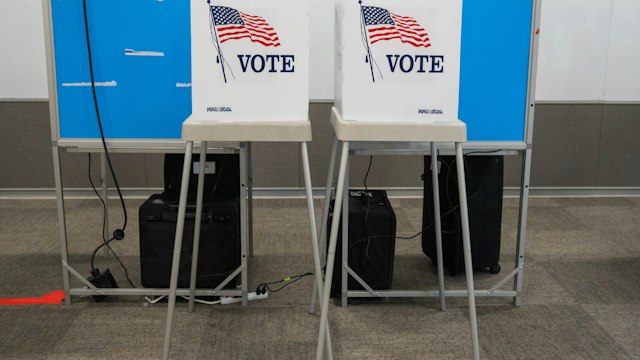
Table of Contents
On September 25, 2026, the U.S. Supreme Court allowed the federal government to continue using an expanded version of the Systematic Alien Verification for Entitlements (SAVE) system to help state and local authorities verify citizenship information for registered voters and people registering to vote. The Court's order is an interim decision while the underlying litigation continues, not a final resolution of every legal issue surrounding the program.
What the Supreme Court Decided
The case, Department of Homeland Security v. League of Women Voters, concerns changes made to the federal SAVE verification system. The Supreme Court granted the federal government's request to stay a lower-court order that had blocked use of the expanded system. The Court's September 25 order allows the program to operate while the government's appeal proceeds. The Supreme Court did not issue a final decision resolving all of the underlying claims.
The Court's order addressed whether federal agencies may share citizenship and immigration-status information for this verification process. It did not change the basic requirement that a person must meet applicable legal requirements to vote in a particular election.
Key point: The Supreme Court's order permits the expanded verification system to continue during the litigation. It is not a final ruling that every database match is accurate or that every person flagged by the system is ineligible to vote.
How the Expanded SAVE System Works
SAVE has traditionally been used by government agencies to verify immigration status and citizenship information for certain government programs and purposes. The federal government expanded the system in 2025 to allow state and local authorities to conduct citizenship-related checks involving voter registration information.
According to the Supreme Court, the modified system added checks against additional federal records, including Social Security information, and allows authorities to conduct searches involving multiple individuals at once. A verification result can identify a record that requires additional review or documentation.
A verification system is not the same thing as a court proceeding or a formal adjudication of a person's citizenship. Government databases can contain incomplete, outdated, or inconsistent information. For that reason, an individual who receives a notice concerning citizenship verification should review the underlying information rather than assuming that a database result conclusively establishes their legal status.
Why Naturalized Citizens Should Pay Attention
Naturalized U.S. citizens should be aware of this development because citizenship information may appear differently across government databases. A person who has become a U.S. citizen through naturalization may have older immigration records that predate naturalization, while other government records may contain newer citizenship information.
The Supreme Court's order discusses circumstances in which a naturalized citizen could be asked to provide additional documentation if the verification system does not confirm citizenship. That type of request should not automatically be interpreted as a finding that the person is not a U.S. citizen.
Naturalized citizens should keep important proof of citizenship available, including a Certificate of Naturalization or Certificate of Citizenship, when applicable. A U.S. passport can also serve as evidence of citizenship. If government records contain inconsistent names, dates of birth, or other identifying information, those discrepancies may need to be addressed separately.
What This Means for Immigrants
Lawful permanent residents and other noncitizens should understand that immigration status and citizenship are different legal concepts. A green card provides lawful permanent resident status, but it does not by itself make a person a U.S. citizen.
At the same time, a voter-registration issue does not automatically establish that a person has violated immigration law. The consequences of any particular situation depend on the person's actual immigration history, citizenship status, voting activity, government records, and the applicable law.
Immigration consequences can be especially fact-specific. Before responding to a government notice that raises questions about citizenship, immigration status, or voting history, it can be important to determine exactly what the government is alleging and what records it is relying upon.
What to Do If You Receive a Notice
If you receive a notice stating that your citizenship or voter-registration information could not be verified, do not ignore the notice. Carefully review the reason for the inquiry, the requested documentation, and any response deadline.
- Keep a copy of the notice and any documents you submit.
- Gather documentation establishing your citizenship or immigration status, if applicable.
- Check whether your name, date of birth, Social Security information, or other identifying information is accurate.
- If you are a noncitizen, do not assume that a voter-registration issue is only an election matter; immigration consequences can depend on the facts and circumstances.
- Consider speaking with an immigration attorney before responding when the notice raises questions about your citizenship, immigration history, or potential immigration consequences.
Important: A database mismatch is not necessarily the same as a final determination that someone is not a U.S. citizen. The specific notice, records, and circumstances should be reviewed before drawing legal conclusions.
The Supreme Court's September 25 order allows the expanded SAVE system to remain in use while the litigation continues. The legal issues surrounding the system may therefore continue to develop.
Ready to talk to an attorney?
We can review a notice involving citizenship verification, immigration records, or a potential immigration consequence and help you understand what the notice means and what options may be available.
Schedule a Consultation About the Author
Vaida Plesa, Esq.
Vaida Plesa is the founding attorney of Plesa Immigration Law, LLC, focusing on U.S. immigration law with an emphasis on removal defense, family-based immigration, and protecting immigrants’ rights in an evolving enforcement landscape.
Related Articles
Supreme Court Upholds Birthright Citizenship in Landmark Immigration Decision
The U.S. Supreme Court reaffirmed that birthright citizenship remains protected under the Fourteenth Amendment, rejecting an executive order that sought to limit automatic U.S. citizenship for certain children born in the United States.
Read more
USCIS Resumes Neighborhood Investigations for Naturalization Applicants
USCIS has reinstated neighborhood investigations for naturalization applicants. Learn what this policy change means, how investigations work, and how to prepare for deeper scrutiny during the citizenship process.
Read more
DHS Launches Landmark USCIS Fraud Investigation in Minnesota
The Department of Homeland Security and USCIS have launched a major fraud investigation—Operation PARRIS—in Minnesota to reexamine refugee cases and strengthen fraud detection measures.
Read more